Fabrication of Control Panel: A Buyer's Guide to Getting It Right the First Time
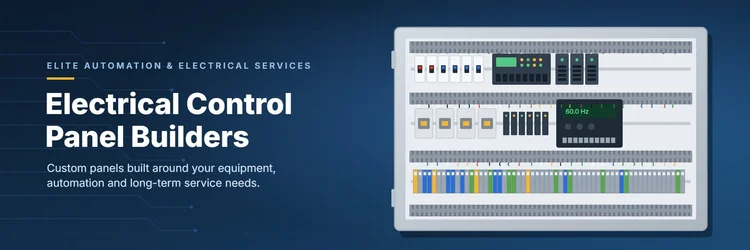
Walk onto any plant floor and you'll find them: gray or beige enclosures
humming quietly on the wall. Nobody notices them when everything works.
Everybody notices when they don't. A control panel is the nerve center of a
machine, a production line, or an entire facility. It starts motors, protects
circuits, passes signals, and keeps operators safe. So the Fabrication of a
Control Panel isn't a line item to squeeze for the lowest price. It's a
decision that shapes uptime, safety, and maintenance costs for the next 15 to
20 years.
This guide walks through what goes into a good panel, what separates a
reliable build from a headache, and how to choose a partner you won't regret
hiring.
What Does Fabrication of a Control Panel Actually Involve?
Many buyers assume it's just "putting components in a box."
It's far more than that.
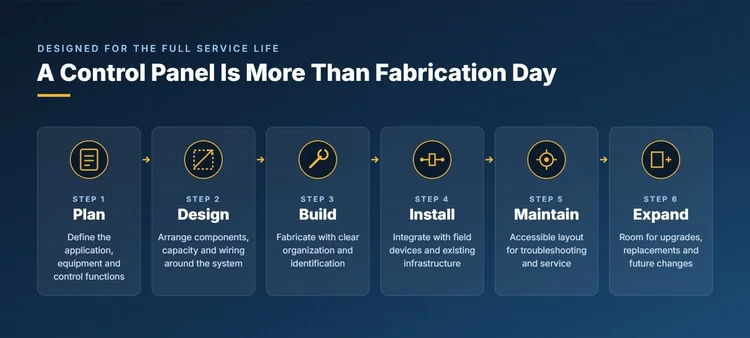
Proper fabrication of a control panel covers the full journey from an
idea to a tested, ready-to-install unit:
• Requirement study:
understanding the load, process, environment, and operator needs.
• Electrical design and drawings: single-line
diagrams, schematics, and wiring layouts.
• Enclosure selection and mechanical work: cutting,
punching, bending, and finishing the cabinet.
• Component mounting and wiring: breakers,
contactors, PLCs, drives, relays, terminals.
• Testing and documentation: functional
checks, insulation tests, and as-built drawings.
• Dispatch and commissioning support: Safe
packing, transportation, and delivery of the completed panel.
Skip or rush any one stage and the problems show up later, usually at 2
a.m. during a production run.
Why Industrial Panel Fabrication Demands a Different Mindset
Office-grade electrical work and Industrial
Panel Fabrication are not the same game. Factories are hot, dusty,
damp, and full of vibration. Power quality can be messy. Operators are busy and
sometimes rough with equipment.
A panel built for these conditions needs:
1. The right ingress protection (IP) rating: A panel in
a food plant that gets washed down needs very different sealing than one in a
dry control room.
2. Thermal planning: Variable
frequency drives and power supplies generate heat. Without proper ventilation,
filters, or cooling, components age fast.
3. Segregation of power and control wiring: This
reduces noise and false signals, which is a quiet killer of automation systems.
4. Space for expansion: You will add something later. Everyone does.
Good Industrial Panel Fabrication anticipates reality instead of the
brochure version of it.
Types of Control Panels You Can Get Fabricated
Not every panel does the same job. Here are the common ones:
• Motor Control Centers (MCC): Manage
multiple motors from one organized system.
• PLC and automation panels: Run
programmed logic for machines and processes.
• VFD panels: Control motor speed and save
energy.
• Power distribution panels (PDB/PCC): Distribute
incoming power safely.
• Automatic transfer switch (ATS) panels: Switch
between mains and generator.
• Capacitor and APFC panels: Improve
power factor and cut penalty charges.
• Instrumentation and process control panels: Handle
sensors, transmitters, and monitoring.
Knowing which one fits your need, or whether a hybrid is smarter, saves
money before a single wire is cut.
Materials and Components: Where Quality Hides
Two panels can look identical from the outside and perform completely
differently inside.
• Enclosure material: Mild steel
(powder-coated) suits most indoor jobs. Stainless steel is better for
corrosive, hygienic, or coastal environments. Sheet thickness matters too. Thin
metal flexes, rattles, and doesn't hold heavy components well.
• Component brands: Reputable
switchgear, drives, and PLCs bring better service life, easier spare parts, and
wider technician familiarity. A cheap breaker saves a little today and costs a
lot when it fails to trip.
• Wiring and terminals: Correct cable sizing, proper ferrules, color
coding, and neat labeling look like small details. They are what make a panel
serviceable at 3 a.m. by someone who didn't build it.
Standards and
Safety You Should Ask About
Don't be shy about asking a fabricator how they ensure compliance. Depending
on your application and region, panels typically need to follow standards such
as IEC 61439 for low-voltage switchgear assemblies, along with applicable
Indian standards and local electrical safety regulations.
Ask about:
• Short-circuit withstand ratings
• Earthing and bonding practices
• Routine tests carried out before dispatch
• Inspection and quality checkpoints
• Availability of test reports and drawings
A confident manufacturer answers these easily. A vague one changes the
subject.
How Much Does Fabrication of a Control Panel Cost?
The honest answer: it depends. But here's what actually moves the
number.
• Complexity: A simple starter panel and a
fully automated multi-drive system are different worlds.
• Component selection: Brand,
rating, and quantity drive a large share of the cost.
• Enclosure size and material: Stainless
costs more than mild steel; larger cabinets cost more to build and ship.
• Customization: Special communication protocols,
HMI screens, and unusual layouts add engineering time.
• Testing and documentation: More
rigorous documentation takes effort, and it's worth paying for.
• Lead time. Rush orders usually cost more.
A word of caution: the lowest quote often leaves things out. Compare
scope line by line, not just the total at the bottom.

Common Mistakes Buyers Make
After seeing enough projects, patterns appear.
• Choosing on price alone: A panel
that fails in year two erases any savings from year one.
• Vague specifications: "Make
me a control panel for my machine" invites guesswork. The clearer your
inputs, the better the output.
• Ignoring the environment: Dust, heat,
moisture, and vibration must be part of the design brief.
• Forgetting maintenance access: If a
technician can't reach a terminal without disassembling half the panel, you've
built a future problem.
• Skipping documentation: No drawings means every troubleshooting session
starts from zero.
How to Choose
the Right Panel Fabrication Partner
Think of this as hiring a long-term teammate, not buying a product off a
shelf. A strong partner usually offers:
• In-house design and fabrication: So
accountability stays in one place.
• Experience in your industry: Manufacturing,
water treatment, HVAC, packaging, power, and so on.
• Transparent quotations: With clear
scope and component lists.
• Testing before dispatch: Ideally
with witnessed inspection if you want it.
• Responsive support: For spares,
modifications, and troubleshooting.
• Proven references: You can actually call.
Visit the workshop if you can. A clean, organized facility tells you
more than any sales pitch.
A Simple Checklist Before You Request a Quote
Keep this handy:
• Load details and voltage levels
• List of motors, drives, and control devices
• Environmental conditions at the installation site
• Required IP rating and enclosure preference
• Control logic or process description
• Communication needs (Modbus, Profinet, Ethernet,
etc.)
• Applicable standards and customer specifications
• Delivery timeline and installation location
Arrive with this information and your quotation will be faster, sharper,
and far more accurate.
Final Thoughts
A well-built control panel is invisible in the best way. It just works,
shift after shift, year after year. Getting there takes sound design, honest
materials, careful workmanship, and thorough testing. Cut corners on any of
those and you'll pay for it later, usually at the worst possible moment.
If you're planning the fabrication of a control panel for a new project,
an upgrade, or a replacement, work with a team that treats your uptime as
seriously as you do.
Contact Us Today to discuss
your control panel fabrication requirements and find the right solution for
your project. Call
Now (+16615782677) to get started!


Comments
Post a Comment